Wednesday, 29 May 2013




Sunday, 12 May 2013
Brief 4 : Tickets and Promotional Material
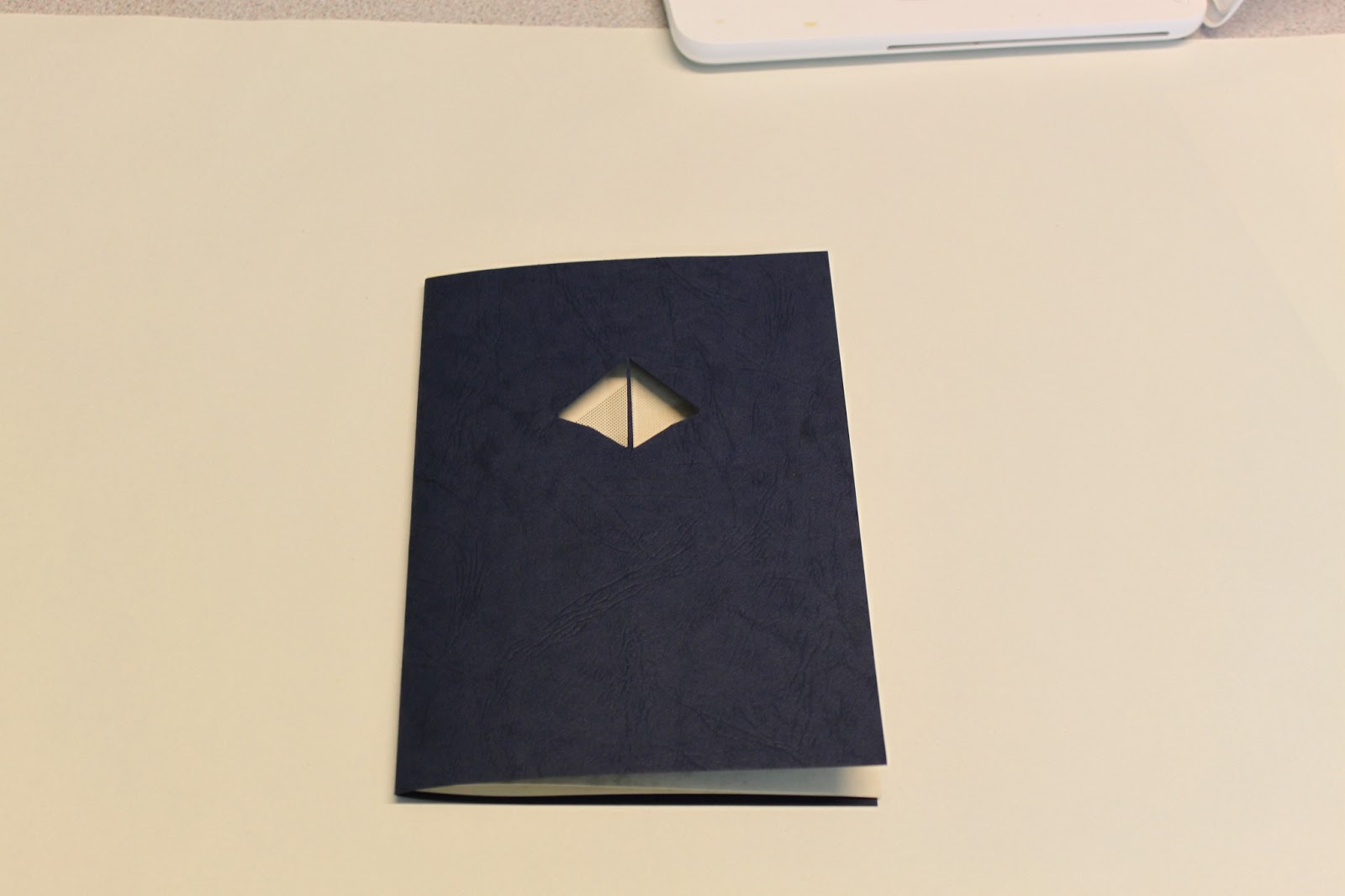
The idea for our publication is that its an educational book to be realised with a promotional event, so far this event is going to include a lecture on the content of our book on the date of 2013's summer solstice to tie in with astrology relating to the Egyptians beliefs. To keep consistent to the artwork I've been producing I've designed the tickets using the same stamp border, Tickets will be sent out to selected museums universities and book shops and customers will receive a stamp on entry. I havent developed the colour scheme as of yet but I think this will come together as my final images begin to progress.

Brief 4 : Laser cut Plaque
I went to laser cutting this week and experimented with a similar technique to etching my hieroglyphs using the heavy raster function on 6mm mdf I created grooves in the wood that would be suitable as a tester to print from. In the same fashion as using wooden block type or lino tile I reflected my design on a horizontal axis and laser cut the wood to be coated then printed. My results are below.
The first set of images were printed using quink ink and acrylic white paint, I found that the ink soaked into the wood far too much and the results were much too blotchy. Also It definitely proved to me I needed a new set of rollers.
After experimenting with quink ink I got some proper rollers and some thick lino printing inks to use as an alternative I found my technique hard to perfect, as the texture of printing inks constantly changed because of the nature of the wood soaking sections up. Originally I started printing with the wood face down onto the stock but as my results weren't too accurate I switched this method around placing the stock onto the wet wood, face up. This gave me much better results, however I think as an overall printing process this works fantastically to gain small blemishes and textures within print, but type becomes illegible and hard to read.
spray paint + lino inks


Brief 4 : The 8 side of Pyramid Khufu
I've finishing the outer design for the print I'm design below and I need to finish the inner frame. The inside is going to consist of an illustration of what I'm talking about a digram and an explanation paragraph with key. This will be consistent throughout the whole series of posters.
In terms of colour the grey and red one is the one I adore the most however I think yellow and blue is more appropriate to Eygpt, I want to keep the colours quite psychedelic and almost faded and aged alike to the real postage stamps.
Brief 4 : Sacred Shapes Re-vamp
An updated version of some of the sacred shapes I've created for mine and Oli's publication;
These are going to play a massive part the concept for the layout of our book.
These are going to play a massive part the concept for the layout of our book.
Brief 4 : Stamps
I've been collecting images from across the internet of Egyptian stamps to get some ideas for the limited edition posters that are going to go with the pack. I love the way their laid out with thick boarders and two or more typefaces, one Eygptian arabic and one english. I think It would be really nice to produce some artwork in a similar style to correspond with our publication, I think the style of these stamps could work really well with the technique I've experimented with in laser cutting.
http://www.timstouse.com/EarthHistory/Egypt/GreatPyramid/interestingfacts.htm
Interesting facts about the 8 sides of a pyramid to use within y first test piece.
http://cassiopaea.org/forum/index.php?topic=27990.0
The Concave Faces of the Great Pyramid
Aerial photo by Groves, 1940 (detail).

In his book The Egyptian Pyramids: A Comprehensive, Illustrated Reference, J.P. Lepre wrote:
One very unusual feature of the Great Pyramid is a concavity of the core that makes the monument an eight-sided figure, rather than four-sided like every other Egyptian pyramid. That is to say, that its four sides are hollowed in or indented along their central lines, from base to peak. This concavity divides each of the apparent four sides in half, creating a very special and unusual eight-sided pyramid; and it is executed to such an extraordinary degree of precision as to enter the realm of the uncanny. For, viewed from any ground position or distance, this concavity is quite invisible to the naked eye. The hollowing-in can be noticed only from the air, and only at certain times of the day. This explains why virtually every available photograph of the Great Pyramid does not show the hollowing-in phenomenon, and why the concavity was never discovered until the age of aviation. It was discovered quite by accident in 1940, when a British Air Force pilot, P. Groves, was flying over the pyramid. He happened to notice the concavity and captured it in the now-famous photograph. [p. 65]
This strange feature was not first observed in 1940. It was illustrated in La Description de l'Egypte in the late 1700's (Volume V, pl. 8). Flinders Petrie noticed a hollowing in the core masonry in the center of each face and wrote that he "continually observed that the courses of the core had dips of as much as ½° to 1°" (The Pyramids and Temples of Gizeh, 1883, p. 421). Though it is apparently more easily observed from the air, the concavity is measurable and is visible from the ground under favorable lighting conditions.
Ikonos satellite image of the Great Pyramid.
Interesting facts about the 8 sides of a pyramid to use within y first test piece.
http://cassiopaea.org/forum/index.php?topic=27990.0
The Concave Faces of the Great Pyramid
Aerial photo by Groves, 1940 (detail).
In his book The Egyptian Pyramids: A Comprehensive, Illustrated Reference, J.P. Lepre wrote:
One very unusual feature of the Great Pyramid is a concavity of the core that makes the monument an eight-sided figure, rather than four-sided like every other Egyptian pyramid. That is to say, that its four sides are hollowed in or indented along their central lines, from base to peak. This concavity divides each of the apparent four sides in half, creating a very special and unusual eight-sided pyramid; and it is executed to such an extraordinary degree of precision as to enter the realm of the uncanny. For, viewed from any ground position or distance, this concavity is quite invisible to the naked eye. The hollowing-in can be noticed only from the air, and only at certain times of the day. This explains why virtually every available photograph of the Great Pyramid does not show the hollowing-in phenomenon, and why the concavity was never discovered until the age of aviation. It was discovered quite by accident in 1940, when a British Air Force pilot, P. Groves, was flying over the pyramid. He happened to notice the concavity and captured it in the now-famous photograph. [p. 65]
This strange feature was not first observed in 1940. It was illustrated in La Description de l'Egypte in the late 1700's (Volume V, pl. 8). Flinders Petrie noticed a hollowing in the core masonry in the center of each face and wrote that he "continually observed that the courses of the core had dips of as much as ½° to 1°" (The Pyramids and Temples of Gizeh, 1883, p. 421). Though it is apparently more easily observed from the air, the concavity is measurable and is visible from the ground under favorable lighting conditions.
Ikonos satellite image of the Great Pyramid.

I.E.S. Edwards wrote, "In the Great Pyramid the packing-blocks were laid in such a way that they sloped slightly inwards towards the centre of each course, with a result that a noticeable depression runs down the middle of each face -- a peculiarity shared, as far as is known, by no other pyramid" (The Pyramids of Egypt, 1975, p. 207). Maragioglio and Rinaldi described a similar concavity on the pyramid of Menkaure, the third pyramid at Giza. Miroslav Verner wrote that the faces of the Red Pyramid at Dahshur are also "slightly concave."
_______________________________________________________________________________
http://www.world-mysteries.com/mpl_2.htm - amazing link for source material
_______________________________________________________________________________
Below I've started to construct my own stamp on Illustrator working similar to the ones i've collected from around the internet. I thought the relief of a stamp could work really nicely in tying in with hieroglyphs and the cutting of pyramid walls. I've imitated the 1920's stamp with both Egyptian Arabic and English however the typeface i've used is called alhambra and is an imitation of an Arabic set of letters however it read english.
The artwork I',m started to produce is for the limited edition posters, promotional material and jigsaw puzzle. Each plaque is going to imitative a different style of stamp and each contain a different interesting set of facts about the pyramids. This particular one is going to be about the 8 sides of pyramid Khufu, a common mis-perception.


Crit Boards
Below are some boards for a crit held with andy looking at where we're up to with our work so far, I really need to catch up on my briefs but have made some successful progress on most of them, I need to Finnish some briefs catch up with others and stay focused on getting all my work done for the deadline.
Thursday, 9 May 2013
Brief 4 : Star Constellation Puzzle
Another piece of relavent context I picked up today was a puzzle of the star constellations, I found it in a charity shop and thought I'd pick it up out of interest in relation to our brief.
In terms of concept building and other deliverables I intend on taking some of our final artwork to print, mounting it on thick mount board and using the laser cutter or jigsaw cut the print into pieces of a puzzle. As an educational pack with event running alongside I think a jigsaw puzzle would be a good educational deliverable.
In terms of concept building and other deliverables I intend on taking some of our final artwork to print, mounting it on thick mount board and using the laser cutter or jigsaw cut the print into pieces of a puzzle. As an educational pack with event running alongside I think a jigsaw puzzle would be a good educational deliverable.